Projects
The Global Mind Monitor
The Global Mind Monitor (GMM) is a self-assessment and reflection tool that gives insight into the development of students’ and professionals’ global and intercultural competences. It was developed in co-creation with Etil Research Group. The GMM is specifically designed to measure and map the development of intercultural competences among students in higher education. It allows students to visualize their intercultural competences at different stages of their curriculum, based on internationally validated quantitative scaling instruments. The goal of the GMM is to enable students, teachers and professionals to engage in meaningful conversations about their skill development in international or intercultural settings.
Several higher education institutions in the Netherlands and abroad make use of this tool, which currently contains over 30,000 individual measurements. Students take part in one, two, or more measurement rounds, and there is also an option for 360° feedback. The GMM maps students’ development across the five dimensions of the Multicultural Personality scale (Van der Zee and Van Oudenhoven, 2000) and the four dimensions of Cultural Intelligence (Ang et al., 2007). It also includes an ethnocentrism scale, a measurement of foreign language skills, and a measure of engagement with sustainability. Next to these individual scores, the GMM also provides users with a toolkit of practical activities to help them develop their skills further. A toolkit for teachers on how to use the GMM and integrate this into their educational practice is provided on our project website.
Researchers at educational institutions using the GMM can work with anonymized and aggregated data, for instance to map the effects of specific curriculum interventions (such as internationalisation at home, study abroad, or internships) or to track a cohort’s development over time. A management dashboard is available to help teachers and administrators gain insights into the outcomes of international learning at an aggregated level.
Recent research projects using GMM data focus on the importance of internationalisation-at-home activities, compare the impact of different educational interventions on intercultural competence development, examine intercultural competence levels of entry-level students, and evaluate student development in higher education over time.
Global Mind Monitor for vocational education
The vocational training (mbo) sector also raised the question of whether a version of the GMM could be developed that is tailored to the experiences and world of mbo students. GM@W carried out a study into how mbo students at levels 3 and 4 read and interpret the existing Global Mind Monitor, and how they navigate the portal. Students and teachers were interviewed, and based on this, the questionnaire and the texts in the portal were adapted. A pilot is now under way in which several mbo schools are testing the GMM.
Global Mind Monitor for the professional workfield
Our latest adaptation of the Global Mind Monitor (GMM) focuses on the professional workfield. Global competence is becoming increasingly important for employee development, training, and organisational growth. With an initial focus on the hospitality industry, we explored sector needs through student projects supervised by the research centre, one of them in collaboration with Corendon Hotels. Combined with our own research, these insights formed the basis for piloting the GMM4Pro with several industry partners.
In partnership with Pillows Hotels, we successfully developed and delivered an employee training programme that is now entering its second round. We are also collaborating with Oostwegel Collection b.v. on the monitor itself under the SLIM programme (Stimulering Leren en Ontwikkelen in het MKB). Together with ETIL Research and IBC-Group, our research centre is currently collecting data within Oostwegel Collection and training employees across its three luxury hotels: Château St. Gerlach, Château Neercanne, and Kruisherenhotel.
These collaborations are helping us build a strong GMM4Pro: a practical tool that enables organisations in hospitality, education, and other sectors to monitor and strengthen the global competence of their employees.
Reflective writing on intercultural experiences
One of the ways in which students’ global competence can be fostered is reflective writing. Reflective writing or blogging has the potential to boost immersive intercultural learning experiences such as an internship abroad, for multiple reasons: blogging is a time and place independent learning activity that deepens reflective thinking, cultural knowledge and self-knowledge, whilst at the same time it encourages peers to learn from each other (Hoefnagels & Schoenmakers, 2018).
The data for our research are collected from the Simulise platform ‘Curious People’ that is used by Zuyd academies Hotel Management School and Oriental Languages and Communication. Students from both academies write about their internship experience, are given (peer) feedback. Their work is assessed on the basis of rubrics developed by our research center.
The current study conducted by Hilde Hanegreefs combines insights from psycholinguistics and text analysis to identify linguistic markers of intercultural competence (ICC) in student blogs about intercultural experiences. These markers of ICC may constitute concrete cues for teachers when assessing reflective writing assignments and allow them to pinpoint concrete areas for improvement in their feedback and interaction with students.
Perceptions of inclusion in the international classroom
In this project, student’s perceptions of inclusion in the international classroom are investigated. The survey data are analysed by students from the Academy Oriental Languages and Communication in the context of a course on internal communication. The students use the outcomes to provide recommendations to improve international community building. The first two cases were the Faculty of Arts and Social Sciences (Maastricht University) and Hotel Management School Maastricht. In 2022, the Maastricht Institute of Arts (Music Academy) is the ‘client’.
Partnership Penn State University
In partnership with Penn State University (USA), our research centre is involved in several international research projects. One project examined the European part of a cross-cultural study on cultural intelligence, hopeful career attitudes, and international mobility. Led by Tom Kuypers, this research explored how employees’ ability to work across cultures shapes their career outlook and resilience in a rapidly changing labour market. The findings contribute to scientific knowledge and provide practical insights for organisations seeking to attract, support, and retain qualified talent.
A second project focuses on student interventions and the role of play in improving learning experiences. Using mini-figures as a discussion tool, the study examines how students engage with complex classroom topics such as diversity. This research shows how innovative teaching methods can strengthen learning experiences around sensitive or challenging issues.
Future projects will analyse longitudinal data from Penn State students on the development of global competence, using both quantitative and qualitative methods. Another forthcoming research line develops a new theoretical perspective on reframing diversity, equity and inclusion (DEI) through an HR lens, helping organisations embed DEI more effectively in policy and practice.
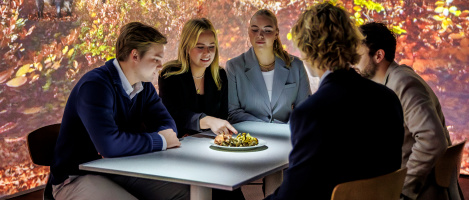
Enhancing teachers’ self-efficacy in dealing with diversity-related dilemmas via perspective-taking with virtual reality
Teachers in higher education increasingly face complex diversity-related classroom dilemmas from exclusion and microaggressions to misinterpreted behaviors, yet often hesitate to intervene, not from unwillingness, but from difficulty understanding students’ perspectives and navigating sensitive dynamics. Marlene Bradbury examines how virtual reality (VR)–based perspective-taking can help teachers move beyond awareness toward deeper understanding, enhancing their diversity beliefs, knowledge, and diversity-related self-efficacy. Using mixed-methods research and experimental VR interventions comparing first- and third-person perspectives, the study investigates how immersive experiences translate into inclusive teaching practices, offering evidence-based strategies to strengthen professional development and improve outcomes in diverse educational environments.
Cultural competence and professional development in teacher education through clinical, role-playing and mixed reality simulations
The World Education Research Association (WERA) is funding research conducted by SITE (Simulation in Teacher Education) on the topic: “Cultural Competence and Professional Development in Teacher Education through Clinical, Role-playing and Mixed reality Simulations: A Model Based on Universal and Contextualized Skills.” For this, researchers from across the globe are sharing their expertise on simulations in teacher education. Marlene Bradbury, together with Hanneke Theelen, form part of this team, sharing insights and expertise on intercultural competence development and VR applications used in education.
PhD project Albert Mhangami
As part of the Global Minds at Work Research Centre in a joint project between Zuyd University of Applied Sciences and Erasmus University Rotterdam, Albert Mhangami explores intercultural competence (ICC) development. The project follows the student life cycle, exploring the intercultural and international variables that influence ICC in young people prior to higher education, interventions for ICC by higher education institutions throughout a person’s enrollment, and how these interventions influence professional choices and experiences.
With the Global Mind Monitor as its primary database, this research:
- Uses cross-sectional data from students entering their first year of Dutch higher education, to conduct multiple linear regression analyses to assess the relationship between prior international experiences and ICC, measured using cultural intelligence (CQS) and multicultural personality (MPQ).
- Conducts latent growth curve analyses on students measured at four points during their Dutch higher education, to examine associations between institutional interventions and CQ and MPQ development.
- Uses cross-sectional data from students in higher education, to conduct structural equation modeling to explore the role of ethnocentrism as a variable in ICC development.
- Uses interviews with alumni and quantitative assessments of the ICC development during and after graduation in a mixed method analysis to examine the role of higher educational ICC interventions on professional choices.
The project will result in:
- Empirical longitudinal evidence of ICC development under institutional interventions
- Practical considerations on what international and intercultural variables should be considered to improve ICC, and how institutions can maximize student ICC.
- Identify key interventions and how they influence different factors of ICC.
- Evidence of the role of ethnocentrism in ICC development.
- Evidence of whether the interventions implemented in internationalization strategies are effective and how they influence the professional development of students.
- This research responds to the growing demand for empirical evidence that ICC and diversity, equity, and inclusivity do in fact make positive contributions to a person’s academic and professional life.
Publications
Journals
Mhangami, A., Boonen, J., Hofhuis, J., Hoefnagels, A., & Jansz, J. (2026). What students bring: Comparing how previous experiences predict intercultural competences of entry-level university students. International Journal of Intercultural Relations, 113, Article 102425. Accessible via: https://www-sciencedirect-com.zuyd.idm.oclc.org/science/article/pii/S0147176726000635
Dias. O., Gao, J., Hoefnagels, A., Johnson, D., Litzen, J., McSweeney, M., Norton, M., Pengelly, K., Sarles, J., Wangani, G., Van Gaalen, A., Veerasamy, Y. (2021). Interviewing Policy Leaders to Advance Intercultural Competence Across Borders. Intercultural Connector Blog. World Council on Intercultural and Global Competence. Accessible via: https://iccglobal.org/2021/09/30/interviewing-policy-leaders-to-advance-intercultural-competence-across-boundaries/
Boonen, J., Hoefnagels, A., Pluymaekers, M., & Odekerken, A. (2021). Promoting international learning outcomes during a study abroad: the moderating role of internationalisation at home. International Journal of Educational Management.
Tews, M. J., Hoefnagels, A., Jolly, P. M., & Stafford, K. (2020). Turnover among young adults in the hospitality industry: examining the impact of fun in the workplace and training climate. Employee Relations: The International Journal.
Boonen, J., Hoefnagels, A., & Pluymaekers, M. (2018). De ontwikkeling van interculturele competenties tijdens een studieverblijf in het buitenland: het belang van culturele afstand. Tijdschrift voor Hoger Onderwijs, 36(2).
Bolton, R.N., Parasuraman, A., Hoefnagels, A., Mighels, N., Kabadayi, S., Gruber, T., Komarova Loureiro, Y., Solnet, D. (2013). Understanding Generation Y and their Use of Social Media: a Review and Research Agenda. Journal of Service Management, 24 (3), 245-267.
Professional publications
Mhangami, A., Boonen, J., Hofhuis, J., Hoefnagels, A., & Jansz, J. (2026). What students bring: Comparing how previous experiences predict intercultural competences of entry-level university students. International Journal of Intercultural Relations, 113, 102425. https://doi.org/10.1016/J.IJINTREL.2026.102425
Bradbury, M., Hanegreefs, H., & Hoefnagels, A. (2025). Teachers’ assessment literacy in reflective blogs [White paper]. Global Minds at Work Research Center.
Mhangami, A., Boonen, J., Hofhuis, J., Hoefnagels, A. (2026). What Students Bring: Comparing Intercultural Competences of Entry-Level University Students. International Journal of Intercultural Relations.
Grosch, I., Boonen, J., & Hoefnagels, A. (2023). Cultural intelligence and the role of international classroom composition: Insights from Dutch higher education. International Journal of Intercultural Relations, 96.
Meeusen, C., & Boonen, J. (2022). Facilitators of intergenerational similarity in social and political attitudes: The role of discussion, sophistication, attitudinal homogeneity, and gender. Acta Politica, 57(2), 277–297. https://doi.org/10.1057/s41269-020-00186-0
Hoefnagels, Boonen, Hanegreefs & Prins (2020). Bouwen aan internationale competenties in een post-corona curriculum: de docent als gamechanger, Science Guide. Via: https://www.scienceguide.nl/2020/11/bouwen-aan-internationale-competenties-in-een-postcorona-curriculum-de-docent-als-gamechanger/
Book (chapters)
Bradbury, M., Hoefnagels, A., den Brok, P., & Theelen, H. (in press). Wat als de multiculturele leeromgeving geen bron van spanning is voor docenten en studenten, maar een bron van rijkdom? In [Wat als onderwijs werkt? Over ontwikkelen, lesgeven en innoveren.] (Chap. 11). Acco.
Boonen, J., Grosch, I., & Hoefnagels, A. (2025). Dutch students’ engagement and disengagement with sustainable development: Findings from the Global Mind Monitor in Dutch higher education. In J. Nooij, B. Broucker, A. Gannon, M. O’Hara, S. Preymann, & A. Santucci (Eds.), Transcending boundaries: For a sustainable future of higher education (pp. 85–109). Brill. https://doi.org/10.1163/9789004740990_005
Ivković, S., Surian, A., Boonen, J., Baumann Montecinos, J., Di Mauro, M., & Cai, X. S. (2024). Developing Intercultural Skills to Advance the United Nations' Sustainable Development Goals. In D. K. Deardorff, & M. Tatebayashi (editors), Current Perspectives on Intercultural and Global Competence (blz. 123-141). Star Scholars Press.
Gregersen-Hermans, J., & Boonen, J. (2022). Cerrar la brecha entre una estrategia educativa y la práctica educativa internacionalizada: La investigación de la Escuela Internacional de Negocios Maastricht. In B. Leask, A. M. Torres-Hernández, M. L. Bustos-Aguirre, & H. de Wit (Eds.), Reimaginar la internacionalización del currículo: Mejores prácticas y posibilidades prometedoras (pp. 273–300). Universidad de Guadalajara.
Gregersen-Hermans, J. & Boonen, J. (2022). The International Business School Maastricht: From an educational strategy to an internationalized educational practice. In: Leask, B., de Wit, H., Torres Hernández, M. & Bustos-Aguirre, M. (Eds.) Reimagining the internationalization of the curriculum. Best practices and promising possibilities. University of Guadalajara
Boonen, J., Hoefnagels, A. & Pluymaekers, M. (2019). The development of intercultural competencies during a study abroad in Pritchard, R., O’Hara, M., Milsom, C., Williams, J. and Matei, L. (Eds.) The Three C-s of Higher Education. Competition, Collaboration and Complementarity. CEU Press: Budapest.
Hoefnagels, A., & Schoenmakers, S. (2018). Developing the intercultural competence of 21st learners with blogging during a work placement abroad. In J. Oskam, D. Dekker, & C. Wiegerink (Eds.), Innovation in hospitality education: Anticipating the educational needs of a changing profession (Vol. 14): Springer Publishers.
Hoefnagels, A., & Pluymaekers, M. (2018). Hospitality experience: The intercultural dimension. In F. Melissen, J. P. Van der Rest, S. Josephi, & R. Blomme (Eds.), Hospitality Experience: An introduction to hospitality management (2nd ed.). Groningen: Wolters Noordhoff.
Hoefnagels, A., van Egmond, T. (2010). Grenzeloos: Interculturele Communicatie in de Wereld van Toerisme en Gastvrijheid. Meppel, Edu’Actief.
Conference papers and presentations
Mhangami, A., Boonen, J., Hoefnagels, A., Hofhuis, J., & Jansz, J. (2025). What students bring: Comparing intercultural competences of entry-level university students. International Association for Cross-Cultural Psychology (IACCP) & International Academy for Intercultural Research (IAIR) Joint Conference, Brisbane, Australia.
Kuypers, T. & Meessen, J. (2025). Bridging Realities: Transforming Career Exploration Through XR. [Conference presentation, Best Industry Paper Award]. 10th International XR-Metaverse conference 2025, Maastricht, the Netherlands.
Boonen, J., Kuypers, T. & Hoefnagels, A. (2025). Dutch Hospitality Students’ Engagement and Disengagement with Sustainable Development: A Case Study Among Students and Staff at a Dutch Hotel Management School. [Conference presentation]. EuroCRHIE conference 2025, the Hague, the Netherlands.
Kuypers, T, Hofhuis, J. & Leiss, L. (2025). Intercultural communication at 30.000 feet: Multicultural personality and job outcomes of airline cabin crew. [Conference presentation]. EuroCRHIE conference 2025, the Hague, the Netherlands.
Bradbury, M. & Prins, P. (2024, November 27). Enhancing global skills through language and culture. [Workshop]. MBO BeroepskapiTAAL Conference, Veenendaal, De Klomp.
Hanegreefs, H., Bradbury, M. & Prins, M. (2024, March 15). How do you assess reflection in writing assignments about intercultural experiences? [Workshop]. Nuffic Symposium "Internationalisering in de Praktijk", The Hague.
Boonen, J., & Grosch, I. (2024). Exploring the link between multicultural personality and engagement with sustainable development: Findings from the Global Mind Monitor in Dutch higher education. Annual EAIR Forum: Sustainability, Resilience and Wellbeing, Cork, Ireland.
Kuypers, T. (2024). Navigating Global Workplaces: The Role of Cultural Intelligence in Fostering Sustainable Careers. [Conference presentation]. The 12th International Conference on International Business (ICIB) 2024, Maastricht, the Netherlands.
Kuypers, T. (2024). Perceptions of Cultural Intelligence among line-level employees. [Conference presentation]. Dutch HRM Network conference 2024, Rotterdam, the Netherlands.
Hanegreefs, H. & Bradbury, M. (2023, September 28). Assessing reflective student blogs on intercultural experiences. [Poster presentation]. EAIE, Rotterdam.
Boonen, J., & Fuchs, K. (2023). A full-cycle approach to global citizenship education in international study projects: The role of pre-departure training and post-arrival consolidation of learning. International Academy of Intercultural Research (IAIR) Biannual Conference: Intercultural Climate Change, Philadelphia, PA, United States.
Boonen, J., & Pluymaekers, M. (2023). Verantwoord nieuws maken van cijfers. Jaarcongres Vereniging voor Onderzoeksjournalisten, Ghent, Belgium.
Kuypers, T. & Hoefnagels, A. (2023). Cultural Intelligence for a More Hopeful Career: A Country Comparison. [Conference presentation]. IAIR Conference 2023, Philadelphia, United States.
Kuypers, T., Grosch, I., Xu, J. Van Hoof, B., Hoefnagels, A. (2022, May). A cross-cultural comparison on the effect of cultural intelligence on employees' career perspective. Paper presented at the SIETAR Europe Conference, Malta.
Hanegreefs, H., &Van Heel-Bradbury, M. (2022, May). Teachers’ self-perception of assessment literacy in reflective writing assignments: an exploratory study. Paper presented at the SIETAR Europe Congress, Valletta, Malta.
Hoefnagels, A., Boonen, J., Prins, M., Gregersen-Hermans, J., Kalogeras, N. (2022, May). Incorporating ‘action for collective well-being and sustainability’ in the assessment of Global Competence: the case of the Global Mind Monitor. Paper presented online at the SIETAR Europe Conference, Malta.
Boonen, J. & Bradbury, M. (2022, June 10). Inclusive international classroom. [Discussion panel member]. Internationalization @ Home Conference, Arnhem.
Sok, J., Kuypers, T. (2022, June) Antecedents of team resilience in hospitality education. Paper presented at the Annual INC Conference in Limassol, Cyprus.
Boonen, J., Grosch, I., Van Heel-Bradbury, M., Hoefnagels, A. (2022, July). Effective interventions for global competence development in an international classroom. Joint Panel Presentation at the Annual Conference of the International Academy for Intercultural Research in Rapperswill, Switserland.
Bradbury, M., Boonen, J. & Hoefnagels, A. (2022, July 27). Intercultural learning assignment – a cross-curricular case study at a Dutch University of Applied Sciences. [Presentation]. IAIR, Rapperswil, Switzerland.
Kuypers, T., Trotta, D. (2022, November). The role of cultural intelligence in fostering individuals’ career development. Paper presented at the 12th Biennial International Conference of the Dutch HRM Network, the Netherlands.
Grosch, I., Boonen, J., & Hoefnagels, A. (2022). The relationship between the composition of the international classroom and domestic students’ cultural intelligence (CQ) [Conference presentation]. 12th International Academy for Intercultural Research Conference: Fostering intercultural hearts and minds: applying intercultural research for a sustainable future, Rapperswil-Jona, Switzerland.
Boonen, J. (2022). Conference symposium: Effective interventions for global competence development in an international classroom (part 1 and part 2).
Van Heel Bradbury, M., Boonen, J., Hoefnagels, A. (2021, November). A Cross-Curricular Case Study: Students Advising Management. Paper presented online at the annual conference of EAPRIL.
Grosch, I., Boonen, J., Hoefnagels, A. (2021, September). Effects of the international classroom composition on domestic students Cultural Intelligence Development. Paper presented online at the Annual EAIR conference in Berlin on 9 September 2021.
Hanegreefs, H., Pluymaekers, M., Hoefnagels, A. (2021, August). Enhancing ICC through blogging. Paper presented online at ABC Vienna.
Tews, M.J., Hoefnagels, A., & Beaumont-Perez, F. (2019, May). Factors to enhance hospitality internship success. Paper presented at the APacCHRIE & EuroCHRIE Joint Conference, Hong Kong, China.
Boonen, J., Arrivillaga, L., Gregersen-Hermans, J. (2019). Hoe meet je de effectiviteit van internationale leeractiviteiten? gepresenteerd op Nuffic Congress 2019, Rotterdam, 10 juni 2019.
Boonen, J., Hoefnagels, A., Odekerken, A. & Pluymaekers, M (2019). Different dimensions of international learning during a study abroad: Comparing international learning outcomes and the importance of internationalization at home. Presented op the Sietar Europe Congress 2019, Leuven, 30 mei 2019.
Boonen, J. (2018). De Global Mind Monitor: interculturele ontwikkeling inzichtelijk maken voor studenten. gepresenteerd op DAIR Seminar 2018, Doorn, 7-8 november 2018.
Boonen, J., Hoefnagels, A., Odekerken, A. & Pluymaekers, M. (2018) The different dimensions of international learning during a study abroad: Comparing international learning outcomes and the importance of preparation at home. The European Higher Education Society (EAIR), Annual Forum, Central European University (CEU), 28-30 augustus 2018.
Tews, M.J., Hoefnagels, A., & Odekerken, A. (2018, November). Does genre matter? Examining the impact of tattoo content on perceptions of employment suitability. Paper presented at the Annual EuroCHRIE Conference, Dublin, Ireland.
Boonen, Hoefnagels & Odekerken (2018). The different dimensions of international learning during a study abroad: Comparing international learning outcomes and the importance of preparation at home. Proceedings of EAIR 2018.
Boonen, J., Hoefnagels, A., & Pluymaekers, M. (2017). The Development of Intercultural Competencies During a Stay Abroad: Does Cultural Distance Matter. The European Higher Education Society (EAIR), Annual Forum, University of Porto, 3-6 September 2017.
Hoefnagels, A., & Boonen, J. (2017). The development of intercultural competencies during a stay abroad: Does cultural distance matter? Presented at the IPoE Forum, Melbourne, Australia (November 2017).
Hanegreefs, H., & Hoefnagels, A. (2017). Curiosity crossing borders: A case of students blogging on international experiences.Paper presented at the EDINEB conference, Utrecht (June 2017).
Piskur, B., Hoefnagels, A. (2017). Two sides to every story: a qualitative study on web-based blogging about intercultural experiences. In: Conference Proceedings of the Annual SIETAR (Society for Intercultural Education, Training and Research) Conference, Dublin, Ireland. (May 2017)
Hanegreefs, H., Hoefnagels, A., Pluymaekers, M. (2017). Can you pin down intercultural competence (IC) on the basis of students’ language use in groupblogs? Paper presented at the Annual GABC (Global Advances in Business and Communication) Conference, Antwerp, Belgium. (May 2017)
Hoefnagels, A., Schoenmakers, S. (2016). Developing intercultural competence of 21st century learners. Paper presented at EAPRIL (European Association for Practitioner Research on Improving Learning) Conference in Porto (November 2016).
Hoefnagels, A. (2015). The Global Mind Check: to Enhance the Global Wiring of the Translation/Interpreting Student. In: Conference Proceedings of the International Maastricht-Lodz lll Duo Colloquium on “Translation and Meaning 2015”, Maastricht. (November 2015)
Meijer, K., Keizer, A., Odekerken, A., Hoefnagels, A. (2015). Intercultural Competence, Global Citizenship or Cosmopolitanism? No Tower of Babel if Hospitality Educators Join Forces. In: Conference Proceedings of Eurochrie 2015, Dubai, UAI.
Hoefnagels, A., Bloemer, J., Pluymaekers, M., & Kasper, H. (2014). Frontline Employees' Intercultural Competence: Does it Impact Customer Evaluations of an Intercultural Service Encounter? In: Conference Proceedings of the Annual Australia New Zealand Marketing Association Conference 2014, Brisbane.
Hoefnagels, A., Bloemer, J. (2014). A Chinese Customer or a 30- Year Old Business Man? A Hotel Managers’ Perspective on Managing Intercultural Service Encounters. In: Conference Proceedings of Eurochrie, Dubai (October 2014).
Hoefnagels, A., Bloemer, J., Odekerken, A. The effect of the frontline employee’s intercultural competence on customer evaluations and behavioral outcomes of intercultural service encounters. In: Conference Proceedings of Eurochrie, Freiburg (October 2013).
Hoefnagels, A., Bloemer, J., Pluymaekers, M. A Global Mind, a Joy Forever? Intercultural Competence as an Antecedent of Work Engagement and Relationship Quality in Domestic Jobs with International Responsibilities. Presented at the Service Management Science Forum (SMSF), Las Vegas (July 2013).
Hoefnagels, A., Bloemer, J., Pluymaekers, M. Direct and indirect effects of frontline employees’ intercultural competence on customer evaluations of intercultural service encounters. Presented at the European Marketing Association Conference (EMAC), Istanbul (June 2013).
Hoefnagels, A. Bloemer, J., Odekerken, A. The Karma of the Chameleon: Intercultural Competence as an Antecedent of Frontline Employees’ Job Attitudes and Behaviors in the Hotel Sector. In: Conference Proceedings of Eurochrie, Lausanne (October 2012).
Hoefnagels, A. ICAWORLD: An Online Platform for Intercultural Awareness Development of Hospitality Management Students. In: Conference Proceedings of Eurochrie, Amsterdam (October 2010).
Media
Ankie Hoefnagels is a columnist for newspaper 'Dagblad de Limburger' and Analyst Education and Society at the regional radio station of Limburg 'L1'.
Bradbury, M. (2022, October). Students Advising Management. Article. World Council Intercultural Connector newsletter.
Boonen, J. (2024). Een naïef voorstel voor een ander politiek debat: Laat politici eens samenwerken. De Morgen