
Scientific publication of Albert Mhangami in the International Journal of Intercultural Relations
In the article “What students bring: Comparing how previous experiences predict intercultural competences of entry-level university students”, one central question is addressed: what do students already bring with them when they start their studies?

What does the article explore?
We often focus on how students develop during their education, but this research takes a different perspective. Based on a large group of first-year students (more than 5,600), the study shows that previous experiences; such as travel, multilingualism, or growing up in a diverse environment, already have a clear impact on their intercultural competences.
A key and relatable finding is that students who are already used to interacting with people from different cultural backgrounds (for example through their social networks) start with a clear advantage. The study therefore highlights the importance of consciously building on these differences within education.
It aligns closely with the vision of HMSM and initiatives such as Global Minds @ Work, where developing an international mindset is a key focus.
Curious for the full article? Read it here.
https://www.sciencedirect.com/science/article/pii/S0147176726000635
Mhangami, A., Boonen, J., Hofhuis, J., Hoefnagels, A., & Jansz, J. (2026). What students bring: Comparing how previous experiences predict intercultural competences of entry-level university students. International Journal of Intercultural Relations, 113, Article 102425.
“It is important to realise that, regardless of whether students come from Limburg or Limpopo, the intercultural experiences they have prior to HMSM contribute to their ability to create hospitality across cultural boundaries.”


Highlights
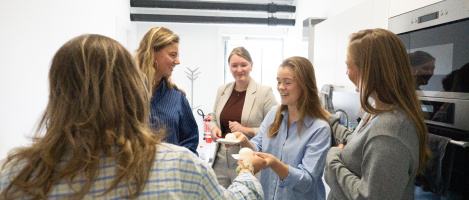
The SCOOP Project: Towards Better Plant-Based Ice Creams
While many plant-based products offer environmental benefits, they often still fall short in terms of taste and texture compared to traditional dairy products.

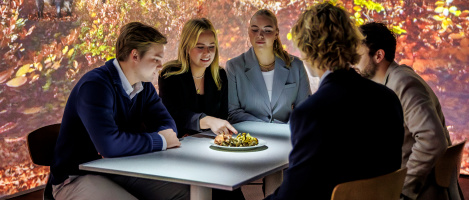
From storytelling to experience design: tech expert Danny Han on immersive food experiences | Danny Han
How technology creates deeper connections between guests and the food on their plate.

Robots will not improve hospitality unless we redesign the experience | Danny Han
We need to move from ‘where can we replace people?’ to ‘where do people matter most?’